Living alone can be liberating, but it also comes with quiet risks. Around 2.4 million Australians live solo, many managing chronic health conditions or ageing in place. For them — and the friends and family who care — the question is the same: What if something goes wrong and no one notices in time?
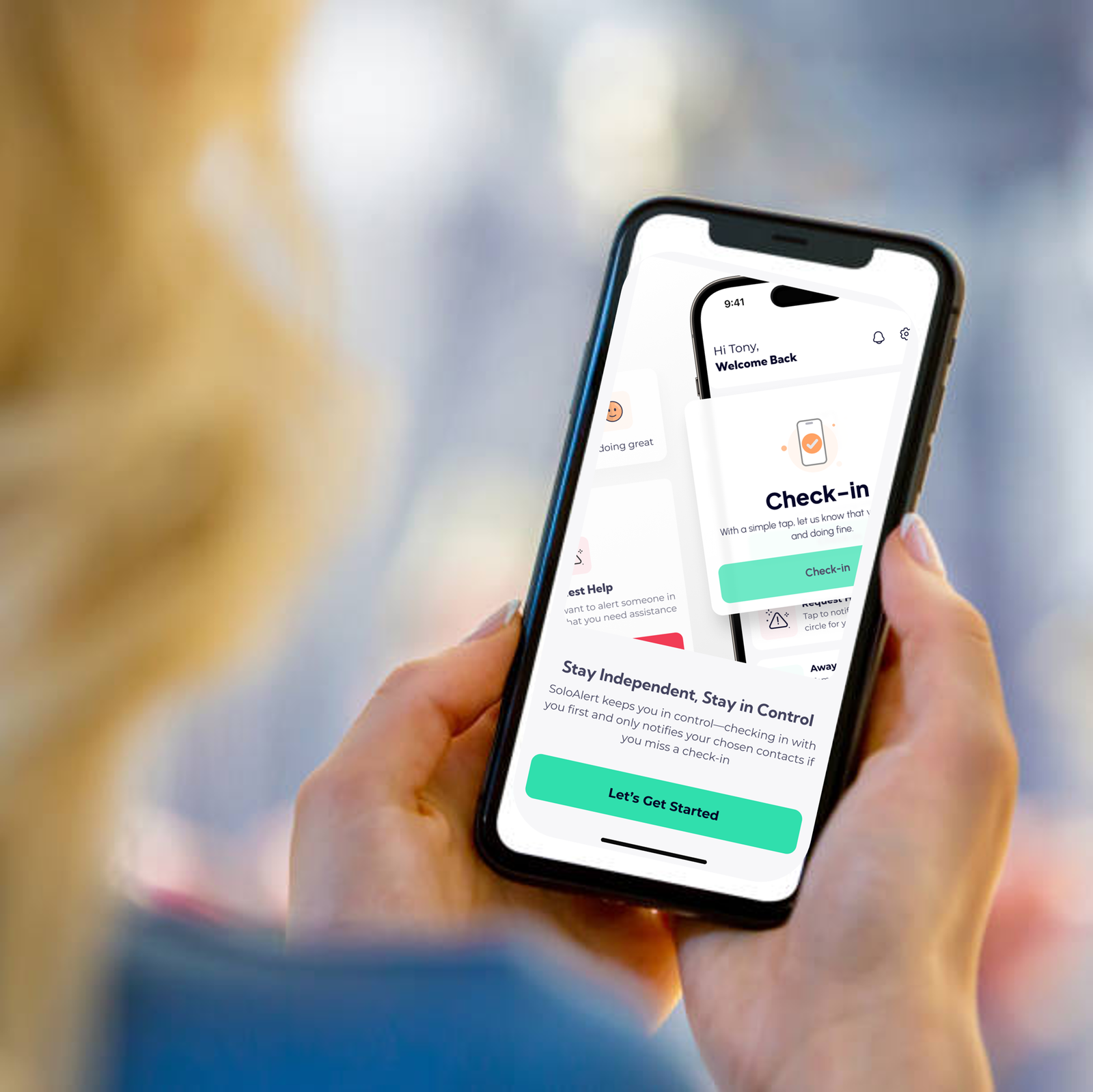
Solo Alert offers a simple, proactive answer. This smartphone-based check-in app helps people living alone stay independent while providing an early warning system for potential health or wellbeing issues. Twice-daily check-ins can trigger alerts to the user’s safety circle, helping ensure timely support — all without extra devices, constant monitoring, or workforce burden.
Why Solo Alert Matters
Delayed recognition of health changes can lead to worse outcomes, hospital visits, and higher healthcare costs. Traditional solutions like emergency alarms, wearables, or clinical monitoring platforms tend to be reactive, require extra hardware, or demand ongoing oversight. Solo Alert fills a clear gap: early, non-intrusive wellbeing signalling that supports independence.
How It Works
Solo Alert is simple, intuitive, and software-only, making it highly accessible. When a user misses a check-in, their nominated safety circle is automatically alerted. This allows timely support before situations escalate, bridging the gap between routine care and emergencies while keeping the user in control.
What Makes Solo Alert Different
Early-signal first: Identifies potential issues before they become emergencies.
Request help & safety circle alerts: Empowers both users and their support networks.
No extra devices required: Works on existing smartphones.
Independence-preserving, low provider burden: Complements clinical workflows rather than replacing them.
In the Australian market, Solo Alert is unique, creating a new category for simple, proactive wellbeing monitoring.
A Sustainable, Accessible Model
Solo Alert operates on a low-cost subscription — less than $1 per week after a free trial — and is exploring partnerships with healthcare providers, insurers, and chronic care programs. This ensures both immediate adoption and long-term integration into healthcare systems.
Proven Engagement and Early Impact
Early evidence shows strong user engagement, with twice-daily check-ins and timely alerts to safety circles. Pilot feedback confirms ease of use and reliability, while discussions with healthcare providers highlight potential for improved care continuity and peace of mind. Future evidence will focus on reducing hospital visits, preventing escalation events, and improving outcomes for users living independently.
Ready to Deploy
Solo Alert is live, fully operational, and requires minimal setup. Its non-intrusive, software-only design allows rapid deployment in healthcare or hospital environments while complementing existing care pathways.
A safety net doesn’t mean giving up independence — it simply means having reassurance when it matters most. Solo Alert helps people live safely, confidently, and on their own terms.
👉 Find out more here: https://solo-alert.com
👉 Download from the App Store: https://apps.apple.com/au/app/solo-alert/id6747101888
👉 Android is coming soon — join the waitlist: https://solo-alert.com/waitlist
👉 60 day free trial then less than $1 per week!