When independence matters more than safety
For many adult children, there is a difficult conversation that comes up as parents get older:
“Mum, what if something happens and nobody knows?”
You might have noticed small changes. Maybe your parent lives alone, has had a fall or health scare, or simply doesn’t have anyone checking in regularly. You want reassurance that they are safe — but when you suggest a personal alarm, they immediately say no.
“I don’t need one.”
“I’m perfectly capable.”
“I don’t want to wear one of those things.”
“I don’t want to be treated like an old person.”
This response is incredibly common.
For many people, the idea of a personal alarm feels like losing independence rather than protecting it. The challenge is finding a solution that respects their dignity while also giving family members peace of mind.
Why do some older adults refuse personal alarms?
It is rarely because they don’t care about their safety. Often, it is because of what the alarm represents.
A traditional personal alarm or pendant can make someone feel like they are being labelled as:
– vulnerable
– dependent
– unable to look after themselves
– “old”
For someone who has spent their life being independent, making their own decisions, and looking after others, this can feel confronting.
The conversation often becomes less about the alarm itself and more about identity.
Your parent may be saying:
“I don’t want to lose control of my life.”
And that is something worth respecting.
Start with the goal, not the device
Instead of starting with: “You need a personal alarm.”
Try starting with:”I just want to know you’re okay if I can’t reach you.”
The goal is not to take away independence.
The goal is to create a simple safety net.
Many people living alone are perfectly capable and happy. They cook, travel, socialise, volunteer, work, and enjoy their own space.
But living independently does come with one challenge: If something unexpected happens, who will know?
A different approach: check-ins instead of alarms
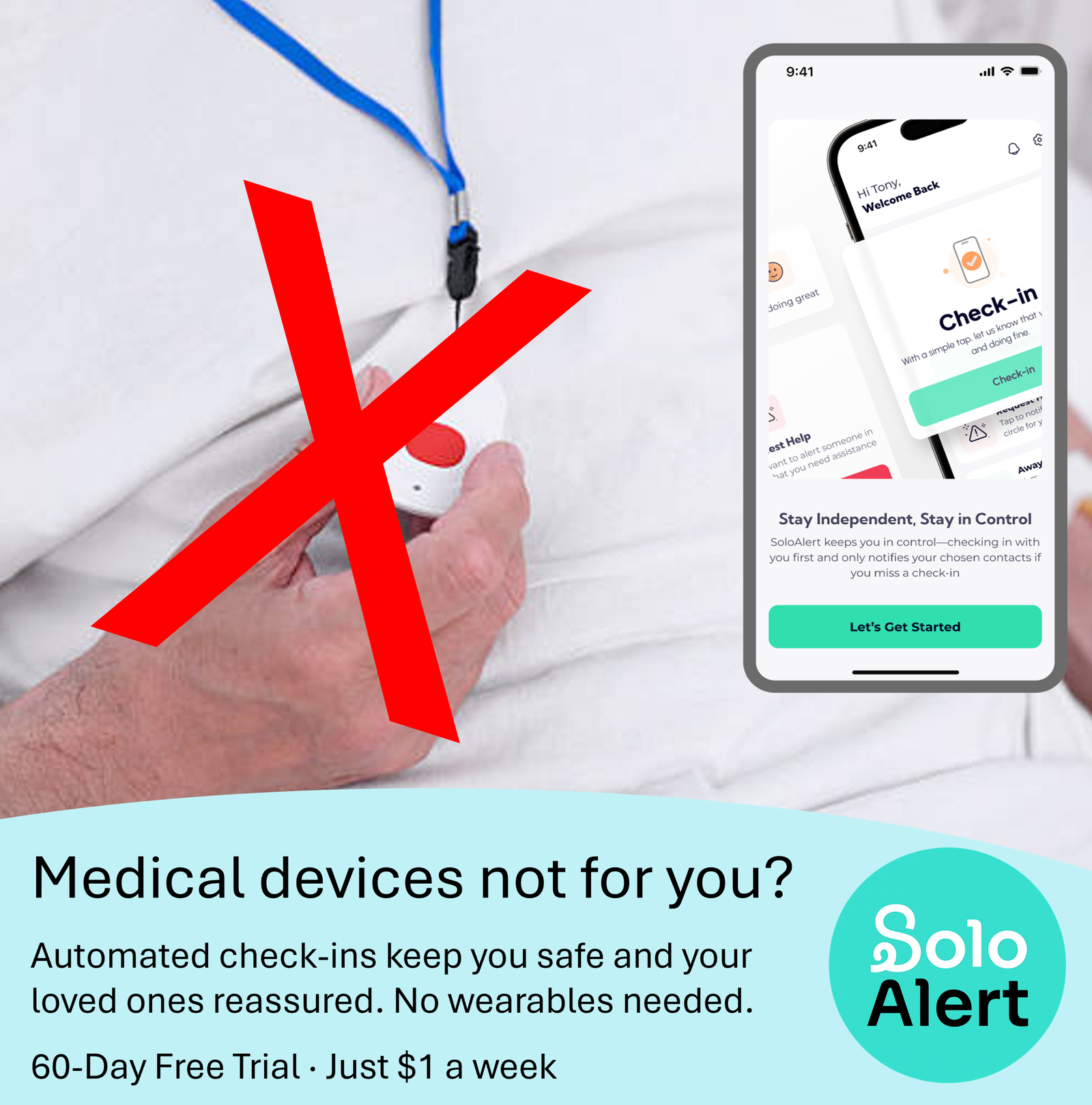
Not everyone wants an emergency button, a pendant, or a device they have to wear.
Some people simply want a discreet way to let someone know they are okay.
That is where daily check-in technology can help.
A check-in app allows someone living alone to confirm they are safe as part of their normal routine. If a scheduled check-in is missed, nominated family members or friends can be notified so they can follow up.
It is not about monitoring someone. It is about connection.
How Solo Alert supports independence
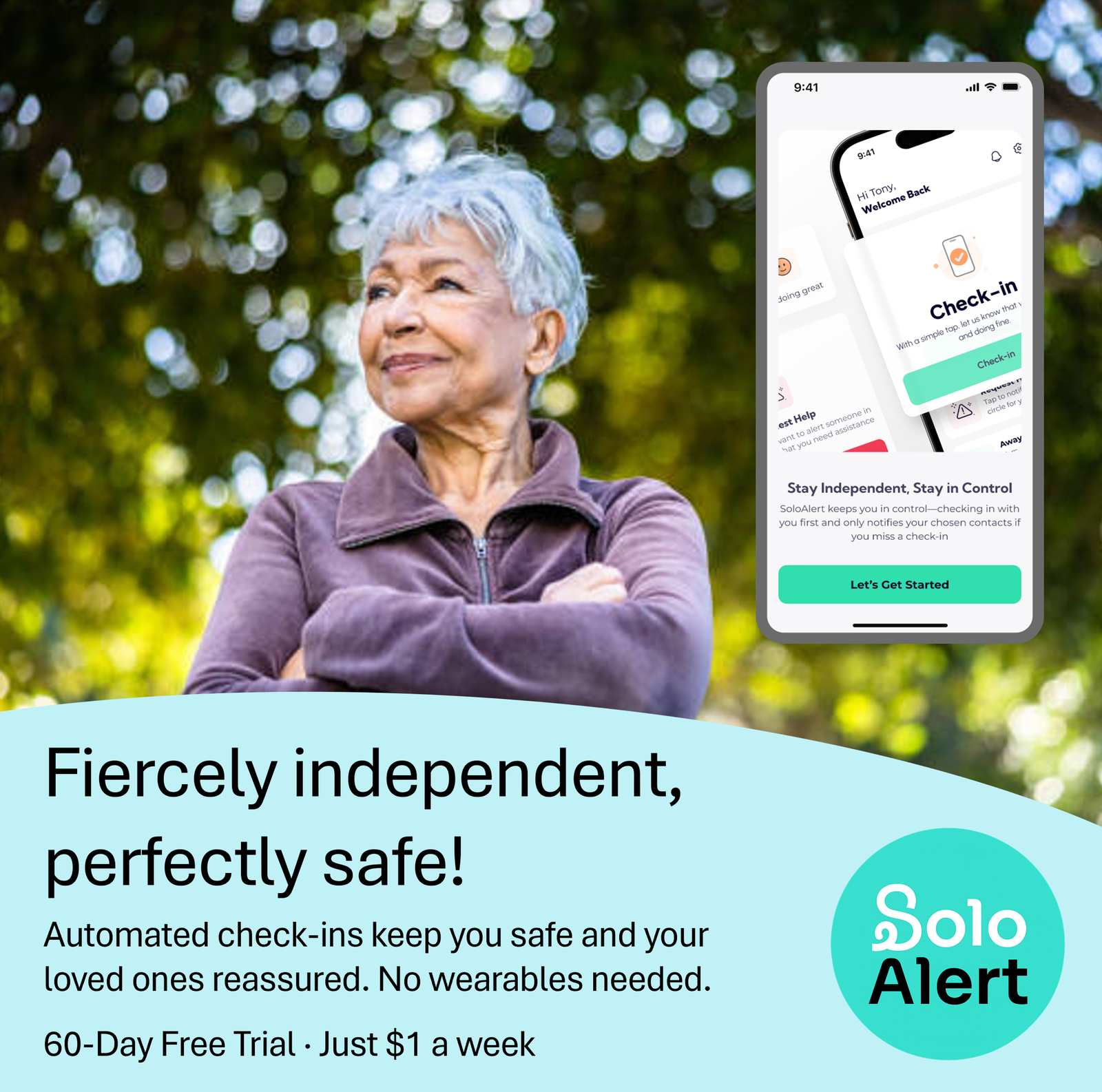
Solo Alert was designed for people who want to live life on their own terms while giving loved ones reassurance.
Instead of wearing a medical device, Solo Alert works through a person’s smartphone.
Users choose their own check-in schedule — whether that is once a day or several times a day — and simply confirm they are okay.
If a check-in is missed, their chosen Safety Circle can be alerted.
For families, it means less worrying.
For the person living alone, it means maintaining control.
How to talk to your parent about safety
Here are some approaches that can help:
1. Avoid making it about ageing
Instead of:
“You need this because you’re getting older.”
Try:
“I’d feel better knowing you’re okay, especially when I can’t get hold of you.”
Safety is something everyone deserves, regardless of age.
2. Make it about your peace of mind
Many parents reject help because they don’t want to worry their children.
Sometimes reframing the conversation helps:
“This isn’t because I think you can’t cope. It’s because I love you and it would help me worry less.”
3. Let them stay in control
People are much more likely to accept support when they are part of the decision.
Let your parent choose:
– who receives notifications
– how often they check in
– what level of support feels comfortable
Independence means having choices.
Supporting someone who wants to live alone
Wanting to live alone does not mean someone wants to be isolated.
Many older Australians are choosing to remain in their own homes for longer, surrounded by familiar places, routines, neighbours, and communities.
The right support should help make that possible.
The best safety solution is often the one a person is willing to use.
Because a safety system only works if it respects the person it is designed to support.
Peace of mind without taking independence away
If your parent lives alone and refuses a traditional personal alarm, it does not mean there are no options.
Sometimes the answer is not more intervention.
Sometimes it is simply a better conversation — and a solution that fits the way they want to live.
Solo Alert helps people living alone stay connected, independent, and reassured — while giving families confidence that someone will know if something isn’t right.
Live independently. Stay connected. Feel reassured.